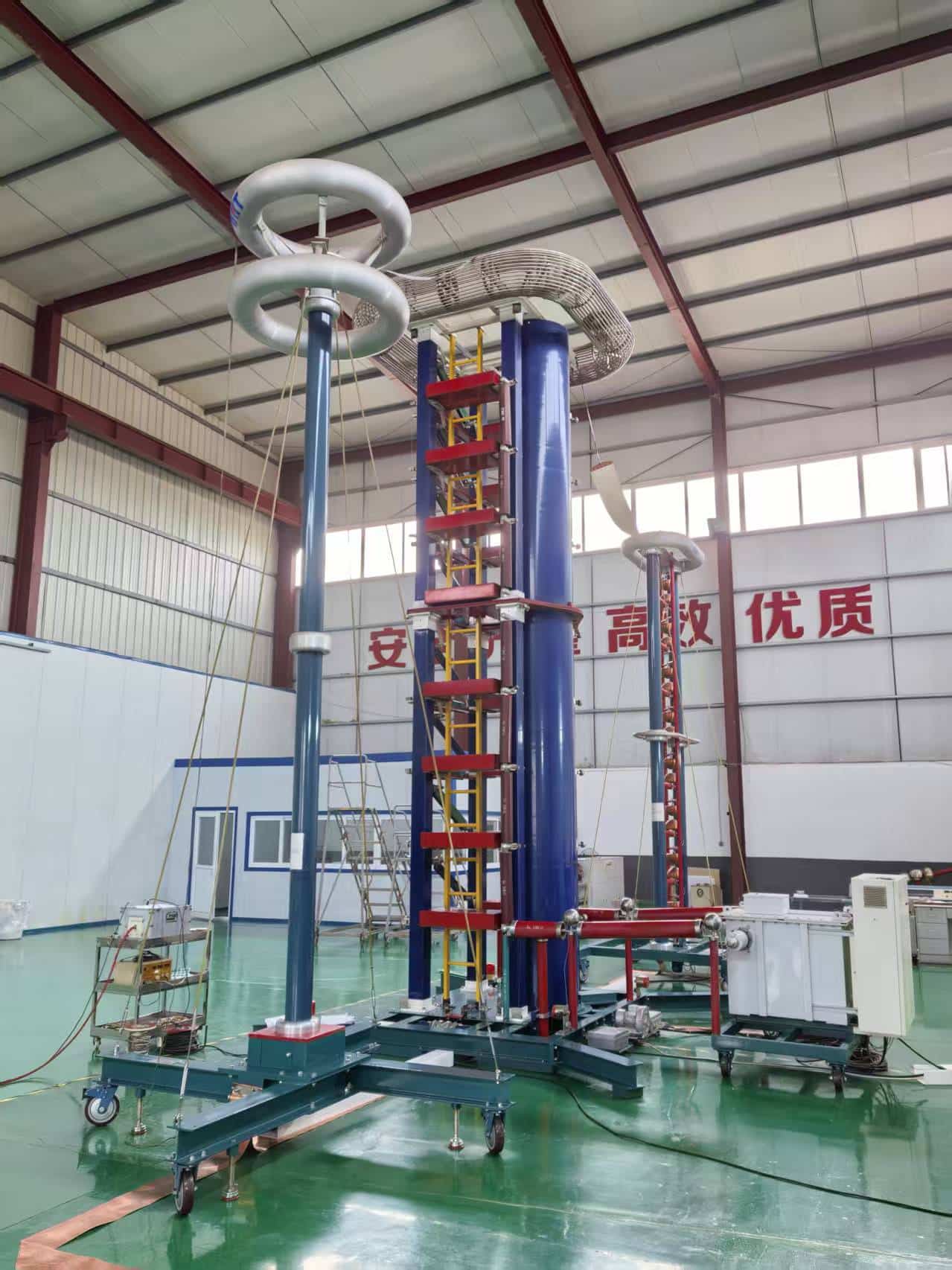

Baoding, China-QILIDA, a specialized manufacturer of high-voltage testing equipment, has announced the successful completion of a critical lightning impulse voltage test on a 35kV coupling capacitor at Electric Power University. The test, conducted using the company’s flagship QLDCJ-400 Lightning Impulse Voltage Generator, demonstrated the system’s exceptional waveform accuracy, stability, and compliance with international testing standards.
Simulating Nature’s Fury in the Lab
Lightning strikes pose one of the greatest threats to power transmission infrastructure. For utilities and manufacturers, proving that equipment can withstand these transient overvoltages is not just a regulatory requirement—it’s a matter of grid reliability.
The Electric Power University research team recently faced this challenge: a newly developed 35kV coupling capacitor required full type testing to verify its insulation performance before field deployment. The test required the generation of standard 1.2/50 μs lightning impulse waves at 200kV—a level that demands precision and repeatability from the testing equipment.
The Challenge: Capturing a Microsecond Phenomenon
Lightning impulse testing operates in the microsecond domain. Any waveform distortion, excessive overshoot, or oscillation can invalidate the test results. For this specific trial, the test protocol required:
30 consecutive shots (15 positive polarity + 15 negative polarity) at 200kV
Full compliance with IEC 60060-1 waveform tolerances
Accurate capture of voltage waveforms for insulation behavior analysis
“High-voltage impulse testing is unforgiving,” said the lead researcher at Electric Power University. “If your generator produces unstable waveforms or poor synchronization, you cannot trust the results. For a type test like this, the equipment must perform flawlessly every time.”
QLDCJ-400: Precision Engineering Meets High-Voltage Demands
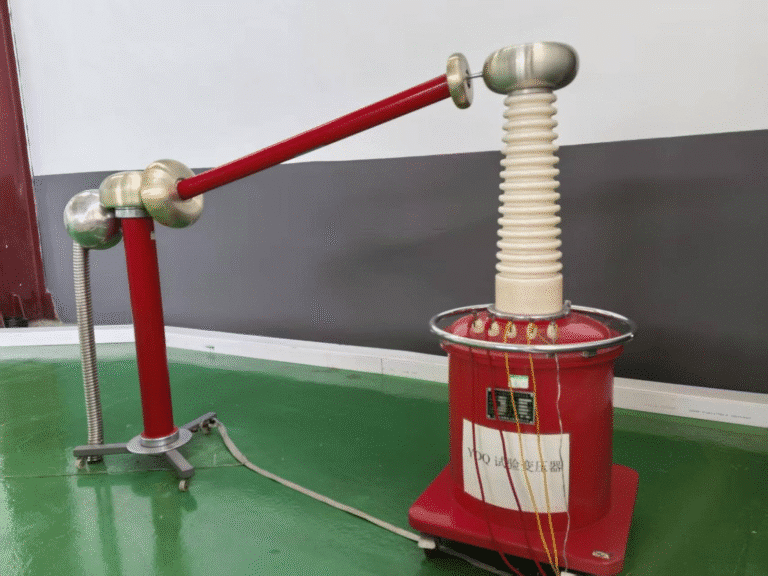
The QILIDA QLDCJ-400 was deployed for this demanding test sequence. Here’s how it performed:
1. Precision Waveform Control – Tailored for Rigorous Evaluation
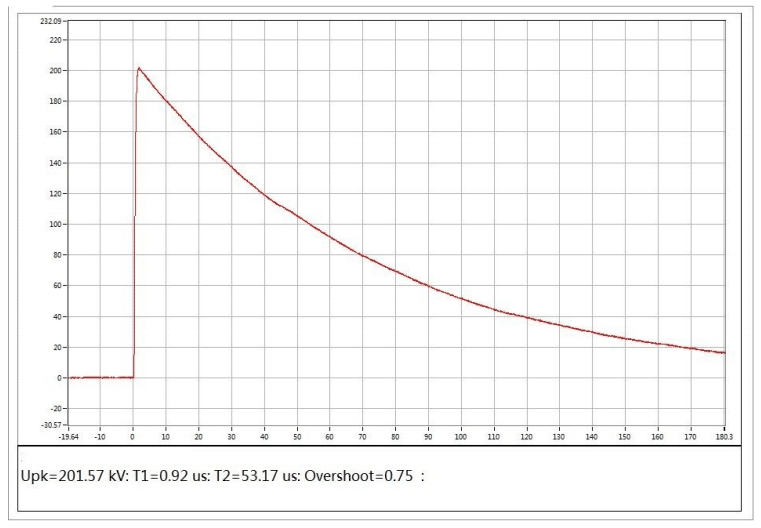
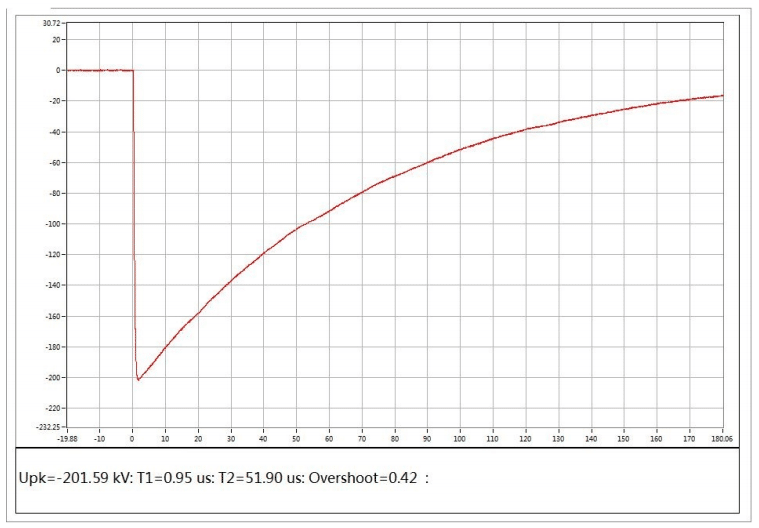
The QLDCJ-400 was operated at 200kV—50% of its maximum rated capacity—delivering clean, stable impulse waveforms throughout the 30-shot sequence. Notably, the test was conducted with a front time of 0.92 μs, intentionally shorter than the standard 1.2 μs specified in IEC 60060-1.
This was not a limitation of the equipment, but a deliberate choice by the research team. A shorter wave front imposes a more severe stress on the capacitive insulation structure, effectively applying a higher equivalent frequency component to the test object. This provides a stricter evaluation of the coupling capacitor’s high-frequency withstand capability and insulation coordination performance.
The QLDCJ-400’s advanced wave-shaping circuit allowed precise adjustment of the front time while maintaining excellent waveform smoothness—with overshoot controlled below 5%—demonstrating the generator’s flexibility and precision beyond standard compliance.
2. Polarity Switching Precision
The test protocol required 15 positive impulses followed by 15 negative impulses. The QLDCJ-400’s advanced polarity changeover system completed the switch in under 60 seconds, with the first negative shot maintaining identical waveform parameters to the positive sequence—critical for comparing insulation behavior under different stress directions.
3. Intelligent Data Acquisition
The integrated high-voltage digital measurement system captured every transient detail. When the coupling capacitor approached its withstand limit, the system recorded the precise voltage collapse waveform, providing researchers with invaluable data on pre-breakdown characteristics.
What the Data Revealed
The 200kV lightning impulse test validated the 35kV coupling capacitor’s design. The unit successfully withstood all 30 shots without flashover or insulation failure, confirming its suitability for field installation in lightning-prone environments.
More importantly, the QLDCJ-400’s precise waveform recording allowed researchers to plot the capacitor’s volt-time characteristic curve—data that will drive further design optimizations.
“The QLDCJ-400 gave us confidence in our results,” the researcher added. “When you’re testing a component that will eventually protect critical grid infrastructure, you need to know—without doubt—that it passed because it’s truly robust, not because your test equipment was forgiving. QILIDA’s generator left no room for doubt.”
Why This Matters for the Industry
For utilities and OEMs sourcing high-voltage equipment, this test demonstrates two things:
The 35kV coupling capacitor meets international standards for lightning impulse withstand
The QLDCJ-400 provides the precision and reliability needed for critical type testing
As grids worldwide face increasing lightning
exposure due to climate change, the ability to accurately test insulation systems becomes ever more critical.
About the QLDCJ-400
The QILIDA QLDCJ-400 Lightning Impulse Voltage Generator is designed for:
Transformer, reactor, and insulator testing
Arrester residual voltage tests
Research institutions and high-voltage laboratories
Full compliance with IEC 60060-1, IEEE 4, and GB/T 16927 standards
Key specifications:
Rated voltage: 400kV (expandable)
Rated energy: Customizable stages
Waveforms: Standard 1.2/50 μs lightning impulse, optional switching impulse
Control: Fully automated computer control with real-time waveform analysis