
Electrical insulation is one of the most critical electrical properties in high-voltage equipment such as transformers, cables, bushings, generators, and GIS systems. Over time, insulation materials deteriorate due to heat, moisture, contamination, and aging.
A dielectric loss tester, also known as a tan δ tester, evaluates insulation condition by measuring dielectric loss factor and capacitance. It is one of the most important diagnostic tools for insulation testing in the power industry.
This article explains the working principle, testing methods, applications, and importance of dielectric loss testing.
1. What Is Dielectric Loss?
Before understanding how a dielectric loss tester works, it is necessary to understand dielectric loss.
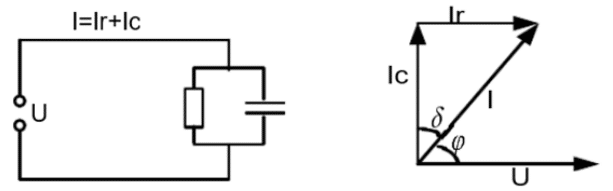
When an AC voltage is applied to insulation material, the current flowing through the insulation consists of two components:
- Capacitive current (Ic)
- Resistive current (Ir)
In ideal insulation:
- Only capacitive current exists
- Current leads voltage by 90°
In real insulation:
- Due to moisture, impurities, aging, and contamination, resistive current appears
- This resistive current causes energy loss in the form of heat
- This energy loss is called dielectric loss
The ratio of resistive current to capacitive current is called the dielectric loss factor, also known as tan δ.
The higher the tan δ value, the worse the insulation condition.
2. Working Principle of a Dielectric Loss Tester
The core principle of a dielectric loss tester is:
Apply an AC test voltage to insulation and measure the phase angle difference between voltage and current.
The tester then calculates the dielectric loss factor (tan δ).
The dielectric loss factor is calculated as:
tan δ = Resistive current / Capacitive current
Where:
- Ir = Resistive current
- Ic = Capacitive current
If insulation is good:
- Resistive current is very small
- tan δ is very low
If insulation deteriorates:
- Resistive current increases
- tan δ increases
Therefore, tan δ testing is an effective method for evaluating insulation aging, moisture ingress, and contamination.
3. Phase Angle Principle (Most Important Principle)
In an ideal capacitor:
- Current leads voltage by 90°
- Phase angle = 90°
In real insulation:
- Current leads voltage by (90° − δ)
- δ is called the loss angle
So:
- Better insulation → smaller δ → smaller tan δ
- Poor insulation → larger δ → larger tan δ
A dielectric loss tester measures this very small angle δ to evaluate insulation condition.
Modern dielectric loss testers use:
- Phase-sensitive detection
- Digital signal processing
- Automatic bridge measurement
- Synchronous sampling technology
to measure this very small phase angle accurately.
4. Measurement Process of Dielectric Loss Testing
The typical measurement process is as follows:
- The tester outputs a stable AC high voltage (usually 50 Hz)
- The voltage is applied to the insulation under test
- The total current flowing through the insulation is measured
- The current is separated into:
- Capacitive current Ic
- Resistive current Ir
- The phase angle δ is calculated
- The dielectric loss factor tan δ is calculated
- Capacitance C is calculated simultaneously
- Test results are displayed and stored
Therefore, dielectric loss testing is essentially a combination of bridge measurement and phase angle measurement.
5. Main Components of a Dielectric Loss Tester
A typical dielectric loss testing system includes:
- AC high voltage power supply
- Standard capacitor (reference capacitor)
- Dielectric loss bridge
- Phase detector
- Current sensor
- Data acquisition system
- Control unit / microprocessor
- Display and storage system
- Test cables and grounding system
Many testers use:
- Schering Bridge
- Digital automatic bridge
- Automatic balancing bridge
to measure dielectric loss.
6. Why Tan δ Indicates Insulation Condition
When insulation deteriorates, the dielectric loss increases. Common causes include:
| Insulation Problem | Effect on tan δ |
| Moisture | tan δ increases |
| Aging | tan δ increases |
| Contamination | tan δ increases |
| Partial discharge | tan δ increases |
| Insulation cracks | tan δ increases |
| Oil deterioration | tan δ increases |
Therefore, tan δ is a very sensitive parameter for insulation diagnosis.
In many cases, tan δ can detect insulation problems earlier than insulation resistance tests.
7. Applications of Dielectric Loss Testing
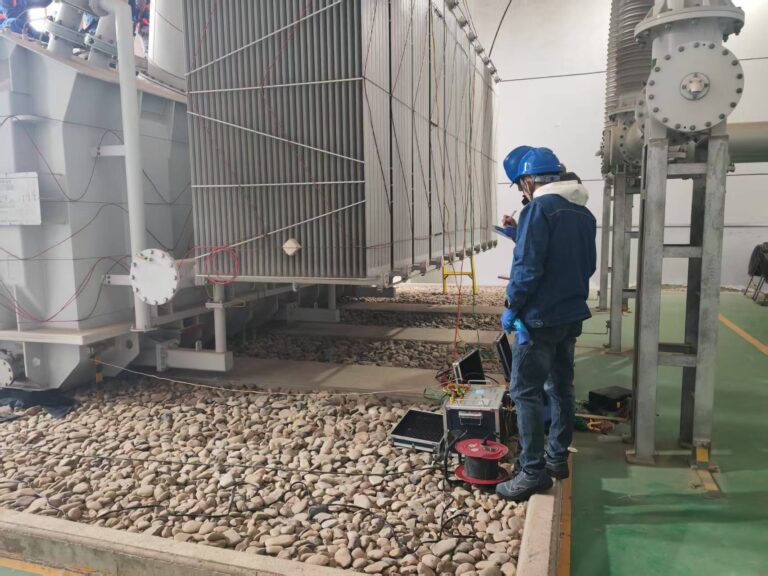
Dielectric loss testing is widely used in the power industry for insulation condition assessment.
Typical test objects include:
- Power transformers
- Current transformers (CT)
- Voltage transformers (PT)
- High voltage cables
- Bushings
- GIS equipment
- Capacitors
- Insulators
- Generators
- Motors
Typical testing scenarios:
- Factory testing
- Commissioning testing
- Preventive maintenance
- Condition monitoring
- Overhaul testing
- Periodic inspection
8. Typical Tan δ Reference Values
| Equipment | Typical tan δ Value |
| Transformer winding | < 0.5% |
| Bushing | < 0.7% |
| Cable | < 1% |
| CT/PT | < 0.5% |
| Capacitor | < 0.2% |
(Note: Actual acceptable values depend on IEC and IEEE standards.)
9. Advantages of Dielectric Loss Testing
Dielectric loss testing provides several important benefits:
- Early detection of insulation aging
- Detection of moisture contamination
- Evaluation of insulation quality
- Prevention of equipment failure
- Optimization of maintenance plans
- Reduction of unexpected downtime
- Extension of equipment service life
Therefore, tan δ testing is one of the most important insulation diagnostic methods for high-voltage equipment.
10. Summary
A dielectric loss tester is an essential instrument for evaluating insulation condition in high-voltage electrical equipment. By applying an AC voltage and measuring the phase difference between voltage and current, the tester calculates the dielectric loss factor (tan δ), which reflects insulation aging, moisture ingress, and contamination.
Regular dielectric loss testing helps power utilities, manufacturers, and maintenance teams detect insulation problems early, improve equipment reliability, and reduce maintenance costs.
If you are involved in transformer, cable, or high-voltage equipment maintenance, a dielectric loss tester is a critical tool for insulation diagnosis and preventive maintenance.